


Village Verkola
Arkhangelsk oblast
since July 8, 2018, 48 points
A Brief History
Many different legends have been created about the name Verkola. One of them tells how Novgorodians, sailing along the Pinega, planted a stake—a ver' kola—in the bank, marking the border between the Chud and Novgorodians. Before Novgorodians settled on the banks of the Pinega, Chud tribes lived. This is confirmed by archaeological excavations on the left bank of the Pinega, near the monastery beyond Popov Creek. As the Novgorodians moved upriver, the Chud tribes moved up the Pinega, into the dense forests. Verkola was originally located in what is now Olyashevo. About two centuries ago, residents settled on a high hill. The village's name, translated from Finno-Ugric, means "a place where fishing nets were spread and dried." The village of Verkola first appears in documentary sources in 1623, in the census book of the Kevrolsky district. The Verkola volost contains 34 villages, including 81 peasant households. In the 18th century, the Verkola settlement consisted of 8 okolos (districts), and in the 19th century, their number reached 19. During this period, the okolos formed several groups of nests: the Verkhnegorskoye, Nizhnegorskoye, and Prokhinskoye settlements. From 1859 to 1917, Verkola was part of the Yarushevskaya volost. On January 28, 1918, the Verkola Village Council was created. As of January 1, 2018, 434 people were registered as residents, with 289 permanent residents. In summer, the population swells significantly due to vacationers. The village of Verkola was first mentioned in documentary sources in the 1623 census book of the Kevrolsky district as the center of the Verkola volost, which comprised 34 villages and 81 peasant households. In the 18th century, the Verkola settlement consisted of 8 "okolos," and by the 19th century, their number had reached 19, forming groups of settlements: Verkhnegorskoye, Nizhnegorskoye, and Prokshinoye.
Attractions
Verkola is home to the F. A. Abramov Literary and Memorial Museum, a branch of the Arkhangelsk Museum of Local History, a state-owned cultural institution. Its collection contains over 10,000 exhibits. The museum also owns the Inyakhinsky House, a large old house that is planned to house a domestic exhibition and an exhibition hall. The Vladimir and Anisya Abramov family museum, "Brother Mikhail's House," also warmly welcomes guests. "Verkola stands on one of the most beautiful spots in Russia. And not only in Russia..." (F. Abramov). From the high hill, endless forests stretching to the horizon, the fast-flowing Pinega River, and meadows are visible.
Near F. A. Abramov's estate (the house in which he lived and worked), the writer himself and his wife, Lyudmila Vladimirovna Krutikova-Abramova, are buried.
Architecture:
The village stretches for approximately 4 kilometers. The group of houses on Prokshina is laid out in a two-row layout, with barns placed "in plain view," and in the second row, facing the courtyards.
The settlement pattern of the Nizhny Konets villages displays a regular spatial organization. Their layout is also linked to a dirt road—the route of future streets. Compositionally, the entire village is united by a bend in the river, and the natural topography, with a group of picturesque rows of houses, combined with the "Veretye" (Lower End) barn settlement, lends the lower part of the village its unique character.
The residential groups of Gora are represented by three rows of houses. Rising upward, they form a distinctive arc, with the houses positioned at an angle to the road, adding to the picturesque character of the upper part of the village.
On a unique intermediate terrace of the slope between the Upper and Lower Ends, uniting them, stood the village's religious center. It was formed around the Church of St. Nicholas. The priest's and psalm-reader's houses also stood here. These buildings, along with the village school (later an elementary school), formed a square from which the previously named villages (later streets) radiated in different directions.
The general coastal-row form of Verkola settlements is the oldest and most distinctive of the Pinega region. The natural environment became the foundation of the entire spatial composition and determined the scale of the main architectural elements. The first row of houses is built directly on the "ridge" of the right bank of the river. The windows of all the houses, both the front and back rows, face the Pinega. The gentle curve of all the rows of houses, echoing the curves of the shoreline, creates the characteristic silhouette of a northern village and, at the same time, the individual appearance of Verkola.
Myza Mountain (Red Hill) has become a favorite recreation spot for village residents and visitors. It offers breathtaking views of the Pinega, the monastery, the village, and the Khyarga Stream. Plans are underway to build an observation deck here and repair the bridge over the stream. In former times, the villagers held a special fondness for the village of Veretya, a place for strolls along the pine alley and the barn town. On the left bank of the Pinega, opposite Verkola, in the village of Novy Put, there is the functioning Holy Artemy Verkola Monastery, which is an architectural monument of federal significance, which includes: a bathhouse (second half of the 19th century), a cell building (1878), an abbot's building (1880s), a utility building (second half of the 19th century), a forge (second half of the 19th century), the Cathedral of the Dormition of the Blessed Virgin Mary (1887-1897), architect A. A. Cherlitsky, the Church of the Righteous Artemy Verkola (1785-1806), the Kazan Church with a fraternal building (1909), the Church of Elijah the Prophet (1647, 1887). The history of the monastery is associated with the name of the holy youth Artemy the Righteous, who lived in Verkola from 1532 to 1544. The monastery welcomes pilgrims and organizes tours of the monastery.
The following archaeological sites of regional significance are located within the Verkolskoye Municipal Formation: the Smutovo Cemetery, the Kambaya Settlement, the Vitsevo Settlement, the Letopola Settlement, the Letopola Cemetery, the Nelmenga Settlement, the Yezhemen Settlement, the Verkola-1 Cemetery, and the Verkola-2 Cemetery.
Verkola is located on the right bank of the Pinega River, within the Verkola State Nature Landscape Reserve of regional significance, established to preserve the valuable landscape depicted in the works of writer F. A. Abramov. The reserve boasts springs and streams with pristine water (the composition of the water has not been officially studied). The dominant vegetation type is forest. Forest vegetation in the reserve is predominantly represented by spruce stands (72% of the reserve's forested area), while pine forests account for only 23%. The remaining forests are primarily composed of secondary deciduous and mixed stands. Along with forests, marshes play a significant role in the reserve's vegetation. Grass-forb meadows are developed within the riverbed and central floodplains of the Pinega River and its tributaries, which flow through the reserve. 274 species of vascular plants, 41 species of mosses, and 38 species of lichens have been identified in the reserve. The reserve's fauna includes mammals such as squirrel, marten, elk, chipmunk, mountain hare, wolf, fox, brown bear, lynx, muskrat, wolverine, beaver, and others. The reserve is home to six bird species, including six rare, vulnerable, and in need of protection: whooper swan, hobby falcon, Tengmalm's owl, Ural owl, Great grey owl, and eagle owl.
Accommodation
How to get there
Verkola is located 55 kilometers from the Karpogory-passenger railway station and 50 kilometers from the district center, Karpogory. The road is unpaved and paved in places. There is no official bus service, but taxis and private drivers operate.
To Arkhangelsk, travel by train, plane, or car. From Arkhangelsk:
Train No. 668 from Arkhangelsk Railway Station to Karpogory Passenger Station, departing at 5:05 PM. Travel time is 5 hours (daily in summer, 4 times a week in other seasons), then by car to the village of Verkola (travel time is about 1 hour).
By car: take the highway from Arkhangelsk through Malye Karely to the Belogorsky turnoff, then follow the sign to Karpogory, passing two water/ice crossings in the village of Palenga and the village of Yasny. Take the M8 federal highway to the Kholmogory fork – turnoff to Ust-Pinega, a ferry across the Northern Dvina. Then follow the sign to Karpogory.
Taxi Arkhangelsk-Verkola. Travel time is 5-6 hours.
When planning your trip, you can check road conditions and ferry schedules on the website http://www.ador.ru/. How to get there
Museums
F. A. Abramov Literary and Memorial Museum, branch of the Arkhangelsk Regional Museum
Anisya Petrovna Abramova (family museum "Brother Mikhail's House")
Calendar of Events
Patronal feasts at the Holy Artemy Verkholsky Monastery:
July 6 – Memorial Day of Artemy Verkholsky (the saint's death),
August 5 – Uncovering of the relics of the youth Artemy,
November 30 – Translation of the relics of Artemy the Righteous and the founding of the monastery.
Cultural organizations (libraries, museums, and community centers) and private individuals organize excursions, walks, hikes, and leisure activities, depending on tourist needs. The Verkholsky Community Center is home to the Verkholsky Folk Choir, whose work is aimed at preserving and promoting northern folk songs and rituals.
The F.A. Abramov Literary and Memorial Museum annually hosts the literary festival "And in Pekashino they put up haystacks..." on July 8-9. Its main focus is recreating the ancient First Mowing festival and promoting the works of F.A. Abramov, with the participation of Pinega folklore and folk groups, writers, and poets.
The Verkholsky Community Center hosts the folklore festival "Northern Latnichek" every two years, which focuses on preserving ancient northern rituals and traditions. The "Verkolskie Primroses" creative exploration festival is held annually to foster interest among creative youth in northern village culture through various art forms.
Every three years in February, the F. A. Abramov Verkolskaya Primary School holds the "Small Abramov Pedagogical Readings."
The Verkolsky parish hosts the Artimiyev Readings for children, which aim to promote educational activities, spiritual and moral development of students, and to awaken interest in the study of Orthodoxy among teachers and parents.
Anniversary celebrations of historical buildings with interesting histories are organized upon request.
Useful Information
Communications: The area has reliable Megafon mobile service, a payphone, and high-speed Rostelecom internet.
Many different legends have been created about the name Verkola. One of them tells how Novgorodians, sailing along the Pinega, planted a stake—a ver' kola—in the bank, marking the border between the Chud and Novgorodians. Before Novgorodians settled on the banks of the Pinega, Chud tribes lived. This is confirmed by archaeological excavations on the left bank of the Pinega, near the monastery beyond Popov Creek. As the Novgorodians moved upriver, the Chud tribes moved up the Pinega, into the dense forests. Verkola was originally located in what is now Olyashevo. About two centuries ago, residents settled on a high hill. The village's name, translated from Finno-Ugric, means "a place where fishing nets were spread and dried." The village of Verkola first appears in documentary sources in 1623, in the census book of the Kevrolsky district. The Verkola volost contains 34 villages, including 81 peasant households. In the 18th century, the Verkola settlement consisted of 8 okolos (districts), and in the 19th century, their number reached 19. During this period, the okolos formed several groups of nests: the Verkhnegorskoye, Nizhnegorskoye, and Prokhinskoye settlements. From 1859 to 1917, Verkola was part of the Yarushevskaya volost. On January 28, 1918, the Verkola Village Council was created. As of January 1, 2018, 434 people were registered as residents, with 289 permanent residents. In summer, the population swells significantly due to vacationers. The village of Verkola was first mentioned in documentary sources in the 1623 census book of the Kevrolsky district as the center of the Verkola volost, which comprised 34 villages and 81 peasant households. In the 18th century, the Verkola settlement consisted of 8 "okolos," and by the 19th century, their number had reached 19, forming groups of settlements: Verkhnegorskoye, Nizhnegorskoye, and Prokshinoye.
Attractions
Verkola is home to the F. A. Abramov Literary and Memorial Museum, a branch of the Arkhangelsk Museum of Local History, a state-owned cultural institution. Its collection contains over 10,000 exhibits. The museum also owns the Inyakhinsky House, a large old house that is planned to house a domestic exhibition and an exhibition hall. The Vladimir and Anisya Abramov family museum, "Brother Mikhail's House," also warmly welcomes guests. "Verkola stands on one of the most beautiful spots in Russia. And not only in Russia..." (F. Abramov). From the high hill, endless forests stretching to the horizon, the fast-flowing Pinega River, and meadows are visible.
Near F. A. Abramov's estate (the house in which he lived and worked), the writer himself and his wife, Lyudmila Vladimirovna Krutikova-Abramova, are buried.
Architecture:
The village stretches for approximately 4 kilometers. The group of houses on Prokshina is laid out in a two-row layout, with barns placed "in plain view," and in the second row, facing the courtyards.
The settlement pattern of the Nizhny Konets villages displays a regular spatial organization. Their layout is also linked to a dirt road—the route of future streets. Compositionally, the entire village is united by a bend in the river, and the natural topography, with a group of picturesque rows of houses, combined with the "Veretye" (Lower End) barn settlement, lends the lower part of the village its unique character.
The residential groups of Gora are represented by three rows of houses. Rising upward, they form a distinctive arc, with the houses positioned at an angle to the road, adding to the picturesque character of the upper part of the village.
On a unique intermediate terrace of the slope between the Upper and Lower Ends, uniting them, stood the village's religious center. It was formed around the Church of St. Nicholas. The priest's and psalm-reader's houses also stood here. These buildings, along with the village school (later an elementary school), formed a square from which the previously named villages (later streets) radiated in different directions.
The general coastal-row form of Verkola settlements is the oldest and most distinctive of the Pinega region. The natural environment became the foundation of the entire spatial composition and determined the scale of the main architectural elements. The first row of houses is built directly on the "ridge" of the right bank of the river. The windows of all the houses, both the front and back rows, face the Pinega. The gentle curve of all the rows of houses, echoing the curves of the shoreline, creates the characteristic silhouette of a northern village and, at the same time, the individual appearance of Verkola.
Myza Mountain (Red Hill) has become a favorite recreation spot for village residents and visitors. It offers breathtaking views of the Pinega, the monastery, the village, and the Khyarga Stream. Plans are underway to build an observation deck here and repair the bridge over the stream. In former times, the villagers held a special fondness for the village of Veretya, a place for strolls along the pine alley and the barn town. On the left bank of the Pinega, opposite Verkola, in the village of Novy Put, there is the functioning Holy Artemy Verkola Monastery, which is an architectural monument of federal significance, which includes: a bathhouse (second half of the 19th century), a cell building (1878), an abbot's building (1880s), a utility building (second half of the 19th century), a forge (second half of the 19th century), the Cathedral of the Dormition of the Blessed Virgin Mary (1887-1897), architect A. A. Cherlitsky, the Church of the Righteous Artemy Verkola (1785-1806), the Kazan Church with a fraternal building (1909), the Church of Elijah the Prophet (1647, 1887). The history of the monastery is associated with the name of the holy youth Artemy the Righteous, who lived in Verkola from 1532 to 1544. The monastery welcomes pilgrims and organizes tours of the monastery.
The following archaeological sites of regional significance are located within the Verkolskoye Municipal Formation: the Smutovo Cemetery, the Kambaya Settlement, the Vitsevo Settlement, the Letopola Settlement, the Letopola Cemetery, the Nelmenga Settlement, the Yezhemen Settlement, the Verkola-1 Cemetery, and the Verkola-2 Cemetery.
Verkola is located on the right bank of the Pinega River, within the Verkola State Nature Landscape Reserve of regional significance, established to preserve the valuable landscape depicted in the works of writer F. A. Abramov. The reserve boasts springs and streams with pristine water (the composition of the water has not been officially studied). The dominant vegetation type is forest. Forest vegetation in the reserve is predominantly represented by spruce stands (72% of the reserve's forested area), while pine forests account for only 23%. The remaining forests are primarily composed of secondary deciduous and mixed stands. Along with forests, marshes play a significant role in the reserve's vegetation. Grass-forb meadows are developed within the riverbed and central floodplains of the Pinega River and its tributaries, which flow through the reserve. 274 species of vascular plants, 41 species of mosses, and 38 species of lichens have been identified in the reserve. The reserve's fauna includes mammals such as squirrel, marten, elk, chipmunk, mountain hare, wolf, fox, brown bear, lynx, muskrat, wolverine, beaver, and others. The reserve is home to six bird species, including six rare, vulnerable, and in need of protection: whooper swan, hobby falcon, Tengmalm's owl, Ural owl, Great grey owl, and eagle owl.
Accommodation
- The village offers a 40-bed guesthouse, "Tatyanina Izba," with a sauna, souvenirs, and the organization of leisure activities and excursions around the area. The hostess is Tatyana Nikolaevna Sedunova.
- European-class guesthouse "V Pekashino," with sauna and entertainment.
- Pilgrim's House: Accommodation is provided by the Holy Artemiev-Verkolsky Monastery.
- Private Accommodation: Local residents also host guests in their homes.
- Meals
- The "Tatyanina Izba" guesthouse provides hot meals (the menu is tailored to the specifics of Pinega cuisine). sedunowatn@yandex.ru, http://pinega29.ru
- Guesthouse "Pekashino": A varied menu based on local produce. https://domvpekashino.ru/
- Private farmsteads continue to raise cattle and supply residents and guests with dairy and meat products.
- The selection of dishes made from the freshest gifts of the North is dazzling: delicious, ripe, aromatic taiga berries and fish spoiled by the crystal-clear rivers and lakes.
How to get there
Verkola is located 55 kilometers from the Karpogory-passenger railway station and 50 kilometers from the district center, Karpogory. The road is unpaved and paved in places. There is no official bus service, but taxis and private drivers operate.
To Arkhangelsk, travel by train, plane, or car. From Arkhangelsk:
Train No. 668 from Arkhangelsk Railway Station to Karpogory Passenger Station, departing at 5:05 PM. Travel time is 5 hours (daily in summer, 4 times a week in other seasons), then by car to the village of Verkola (travel time is about 1 hour).
By car: take the highway from Arkhangelsk through Malye Karely to the Belogorsky turnoff, then follow the sign to Karpogory, passing two water/ice crossings in the village of Palenga and the village of Yasny. Take the M8 federal highway to the Kholmogory fork – turnoff to Ust-Pinega, a ferry across the Northern Dvina. Then follow the sign to Karpogory.
Taxi Arkhangelsk-Verkola. Travel time is 5-6 hours.
When planning your trip, you can check road conditions and ferry schedules on the website http://www.ador.ru/. How to get there
Museums
F. A. Abramov Literary and Memorial Museum, branch of the Arkhangelsk Regional Museum
Anisya Petrovna Abramova (family museum "Brother Mikhail's House")
Calendar of Events
Patronal feasts at the Holy Artemy Verkholsky Monastery:
July 6 – Memorial Day of Artemy Verkholsky (the saint's death),
August 5 – Uncovering of the relics of the youth Artemy,
November 30 – Translation of the relics of Artemy the Righteous and the founding of the monastery.
Cultural organizations (libraries, museums, and community centers) and private individuals organize excursions, walks, hikes, and leisure activities, depending on tourist needs. The Verkholsky Community Center is home to the Verkholsky Folk Choir, whose work is aimed at preserving and promoting northern folk songs and rituals.
The F.A. Abramov Literary and Memorial Museum annually hosts the literary festival "And in Pekashino they put up haystacks..." on July 8-9. Its main focus is recreating the ancient First Mowing festival and promoting the works of F.A. Abramov, with the participation of Pinega folklore and folk groups, writers, and poets.
The Verkholsky Community Center hosts the folklore festival "Northern Latnichek" every two years, which focuses on preserving ancient northern rituals and traditions. The "Verkolskie Primroses" creative exploration festival is held annually to foster interest among creative youth in northern village culture through various art forms.
Every three years in February, the F. A. Abramov Verkolskaya Primary School holds the "Small Abramov Pedagogical Readings."
The Verkolsky parish hosts the Artimiyev Readings for children, which aim to promote educational activities, spiritual and moral development of students, and to awaken interest in the study of Orthodoxy among teachers and parents.
Anniversary celebrations of historical buildings with interesting histories are organized upon request.
Useful Information
- Verkolsky Monastery - http://www.verkola.ru/;
- Website dedicated to the life and work of F. A. Abramov - http://fabramov.ru;
- Friends of the F. A. Abramov Museum Club - https://vk.com/museyfaa;
- Verkolsky Folk Choir https://vk.com/club131238878;
- Verkola Pervotsvety https://vk.com/vpervo;
- Artemyevo-Verkola Monastery and the village of Verkola https://vk.com/club7984506;
- Verkola: yesterday, today, tomorrow https://vk.com/verkola29.
- 3 general merchandise stores (2 individual entrepreneurs and the Karpogorskoye consumer society);
- A first aid post (paramedic and nurse) where you can also purchase necessary medications;
- A post office (Russian Post) offers airline and train ticket sales and cash withdrawals from bank cards (limit up to 5,000 rubles);
- Verkola Municipal Administration;
- A chapel where church sacraments (baptisms, weddings, etc.) are held;
- A children's playground (modern facilities – swings, carousel, slide, throwing board, benches).
Communications: The area has reliable Megafon mobile service, a payphone, and high-speed Rostelecom internet.
Map of villages
News
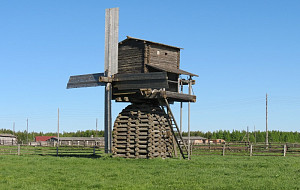
The expedition to Arkhangelsk region and inauguration of Kimzha
The most beautiful village in the Arctic
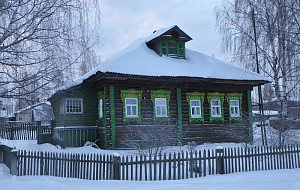
in search of the most beautiful villages
Working visit to Kostroma region
the most beautiful villages of Russia welcome tourists!
About situation in Kinerma
Subscribe to the news of beautiful villages:
Enter your email

123592, Moscow, Marshal Katukov, 20
Tel .: +7 (499) 977-8801
Tel.: +7 (495) 942-7534
E-mail: info@krasaderevni.ru
Tel .: +7 (499) 977-8801
Tel.: +7 (495) 942-7534
E-mail: info@krasaderevni.ru
0 Reviews