


Village Suzdal
Vladimir Region
since September 8, 2018, 73 points
Suzdal is unrivaled in its abundance of monuments and the preservation of its original appearance. It boasts a large collection of religious and civil architecture from the 13th to 19th centuries. Remaining within the borders of the 18th century, Suzdal has managed to preserve its ancient topography, the indescribable character of an ancient Russian city, and the remarkable harmony of ancient Russian architecture and its surroundings.
Within the 9 square kilometers of the historic part of the city are 305 architectural and cultural monuments, including five monastery complexes, 30 churches, 14 bell towers, and dozens of magnificent examples of civil architecture. Of these, 79 are federal monuments, 167 are regional monuments, 63 are designated sites, and four ensembles of UNESCO World Heritage sites.
Main attractions:
The architectural ensemble of the Suzdal Kremlin, including three churches near the Kremlin ramparts:
- Assumption Church (17th century)
- Nikolskaya Church (1720-1739)
- Nativity of Christ Church (1775)
Architectural ensembles:
- Spaso-Evfimiev Monastery
- Pokrovsky Monastery
- Alexander Monastery
- Robe Deposition Monastery
- Vasilievsky Monastery
The architectural ensemble of the Trade Square:
- Trade Rows (1806-1811)
- Church of the Resurrection (1732)
- Church of the Kazan Icon of the Mother of God (1739)
- Tsar Constantine Church (1707)
- Church of the Icon of the Mother of God "Joy of All Who Sorrow" (1750-1787)
- Church of the Entry of the Lord into Jerusalem (1702-1707)
- Church of Paraskeva Pyatnitsa (1772).
Churches:
- Beheading of John the Baptist (1720)
- St. Antipas (1745)
- St. Lazarus (1667)
- St. Nicholas of the Cross (1770)
- Cosmas and Damian (1725)
- Church of the Sign (1749)
- Deposition of the Robe (1777)
- St. Boris and Gleb (1749)
- St. Elijah the Prophet (1744)
- Epiphany (1781)
- Nativity of John the Baptist (1739)
- Tikhvin Icon of the Mother of God (17th century)
- St. Nicholas (1712)
- St. Peter and Paul (1699)
- Smolensk Icon of the Mother of God (1707)
- St. Simeon the Stylite (1749)
- Church of the Exaltation of the Cross (1696)
- Cosmas and Damian on Korovniki Street (18th century)
- Flora and Laurus (1803)
- Archangel Michael (18th century)
- Alexander Nevsky (early 20th century)
Architectural ensemble of the Museum of Wooden Architecture:
- Transfiguration Church from the village of Kozlyatyevo, Kolchugino District (1756)
- Resurrection Church from the village of Patakina, Kamenskovsky District (1776)
- A middle-class peasant's hut from the village of Ilkino, Melenkovsky District (19th century)
- A hut from the village of Kamenevo, Kamenskovsky District
- A two-story house of a wealthy peasant from the village of Log, Vyaznikovsky District
- A house with a mezzanine from the village of Tyntsy, Kamenskovsky District (second half of the 19th century)
- Windmills with a tent roof from the village of Moshok, Sudogodsky District (18th century)
- Granary-storage building from the village of Moshok (19th century)
- Wheeled well from the village of Koltsovo, Selivanovsky District (19th century)
- Bathhouse from the village of Novo-Aleksandrovo, Suzdal District (19th century)
- Two barns (19th century)
Food, Gastronomy, Terroirs
13 restaurants with a total of 1,429 seats, 10 cafes with 305 seats, and 11 bars.
Accommodation
Currently, the city is home to four large hotel and tourist complexes: Pushkarskaya Sloboda with 291 rooms; Goryachie Klyuchi with 185 rooms; Turtsentr with 705 rooms;
Nikolaevsky Posad with 180 rooms, including economy rooms and four shared rooms for pilgrims. All complexes have a well-developed network of hotels, catering outlets, business centers, conference halls, cinemas and concert halls, and other entertainment services available to guests and residents of the city, including spas, tanning salons, gyms, swimming pools, saunas, and ice rinks.
The city also has 50 guest houses with a total of 700 rooms, as well as a tourist center run by the municipal institution "Center for the Development of Physical Culture, Sports, and Tourism."
How to get there
Suzdal is located 220 km from Moscow. It can be reached by car or bus.
There is no direct train service between Moscow and Suzdal. The only way to get there is with a transfer in Vladimir, which is 26 km away. The trip from Moscow to Vladimir takes less than 2 hours on the Lastochka train, while long-distance trains take 2.5-3 hours. Trains and Lastochka trains depart from Kursky Station. From Vladimir, Suzdal is easily reached by bus. Vladimir's train and bus stations are located close to each other, so transfers are short. Buses depart every half hour and travel time is just under an hour. Passengers arrive at the Suzdal bus station, which is 1.5 km from the city center.
From St. Petersburg, the drive to Suzdal takes 12-16 hours. By train, as from Moscow, you'll get there with a transfer in Vladimir. The fastest way to get there is by taking the Sapsan train to Nizhny Novgorod.
Museums
Of great importance to the city is the Suzdal Historical and Art Museum, which since 1958 has been a branch of the Vladimir-Suzdal Historical, Architectural, and Art Museum-Reserve. It includes the following museum complexes:
The Spaso-Evfimiev Monastery Museum Complex. The monastery was founded in 1352 by the Suzdal-Nizhny Novgorod Prince Boris Konstantinovich. The first abbot of the monastery was St. Euthymius, who belonged to the circle of spiritual companions of St. Sergius of Radonezh. After Euthymius's canonization (1549), the monastery became known as the Spaso-Evfimiev Monastery. The patronage of the Suzdal and Moscow princes provided the monastery with rich land holdings and many privileges. By the end of the 17th century, the monastery had become one of the richest in Rus'. The monastery's existing stone complex was formed in the 16th and 17th centuries. In 1766, a "prison for insane convicts" opened within the monastery, which operated until 1905. The monastery also served as a prison during the Soviet era. Closed in 1923, the monastery came under the control of the OGPU (the Joint State Political Directorate) and became a political prison. In 1940-1941, the prison became a prison camp for prisoners of war from 1943 to 1946. After the war, a children's colony opened within the monastery—first for men, then for women. In 1967, major restoration work began, and within a few years, the buildings were repurposed as museums. The ensemble of the Spaso-Evfimiev Monastery represents a rare example of the coordinated restoration and museumification of ancient Russian architectural monuments, and was awarded the State Prize of the RSFSR in 1977. The architectural ensemble of the Spaso-Evfimiev Monastery was inscribed on the UNESCO World Heritage List in 1992.
Suzdal Kremlin. The Suzdal Kremlin is an architectural complex consisting of a series of defensive ramparts, towers, and churches, forming the core of the ancient city of Suzdal, located on a bend in the Kamenka River. It was designated a UNESCO World Heritage Site in 1992.
Museum of Wooden Architecture. The Museum of Wooden Architecture in Suzdal is a vast open-air complex. Visitors can see and study unique wooden buildings and even entire streets of houses, reflecting the culture and everyday life of the Russian people. All the wooden structures on display in the museum complex date back to the 18th and 19th centuries.
Private museums operate in the city:
Neskuchny Museum Izba. The Neskuchny Museum tavern offers visitors the opportunity to immerse themselves in the atmosphere of 19th-century Russian life. Interactive programs are held here, including games, quizzes, workshops, and theatrical performances.
Art Salon "12 Months" is a warm and cozy art salon in Suzdal. A place for family and friends, a place where creativity unites and inspires.
Within the 9 square kilometers of the historic part of the city are 305 architectural and cultural monuments, including five monastery complexes, 30 churches, 14 bell towers, and dozens of magnificent examples of civil architecture. Of these, 79 are federal monuments, 167 are regional monuments, 63 are designated sites, and four ensembles of UNESCO World Heritage sites.
Main attractions:
The architectural ensemble of the Suzdal Kremlin, including three churches near the Kremlin ramparts:
- Assumption Church (17th century)
- Nikolskaya Church (1720-1739)
- Nativity of Christ Church (1775)
Architectural ensembles:
- Spaso-Evfimiev Monastery
- Pokrovsky Monastery
- Alexander Monastery
- Robe Deposition Monastery
- Vasilievsky Monastery
The architectural ensemble of the Trade Square:
- Trade Rows (1806-1811)
- Church of the Resurrection (1732)
- Church of the Kazan Icon of the Mother of God (1739)
- Tsar Constantine Church (1707)
- Church of the Icon of the Mother of God "Joy of All Who Sorrow" (1750-1787)
- Church of the Entry of the Lord into Jerusalem (1702-1707)
- Church of Paraskeva Pyatnitsa (1772).
Churches:
- Beheading of John the Baptist (1720)
- St. Antipas (1745)
- St. Lazarus (1667)
- St. Nicholas of the Cross (1770)
- Cosmas and Damian (1725)
- Church of the Sign (1749)
- Deposition of the Robe (1777)
- St. Boris and Gleb (1749)
- St. Elijah the Prophet (1744)
- Epiphany (1781)
- Nativity of John the Baptist (1739)
- Tikhvin Icon of the Mother of God (17th century)
- St. Nicholas (1712)
- St. Peter and Paul (1699)
- Smolensk Icon of the Mother of God (1707)
- St. Simeon the Stylite (1749)
- Church of the Exaltation of the Cross (1696)
- Cosmas and Damian on Korovniki Street (18th century)
- Flora and Laurus (1803)
- Archangel Michael (18th century)
- Alexander Nevsky (early 20th century)
Architectural ensemble of the Museum of Wooden Architecture:
- Transfiguration Church from the village of Kozlyatyevo, Kolchugino District (1756)
- Resurrection Church from the village of Patakina, Kamenskovsky District (1776)
- A middle-class peasant's hut from the village of Ilkino, Melenkovsky District (19th century)
- A hut from the village of Kamenevo, Kamenskovsky District
- A two-story house of a wealthy peasant from the village of Log, Vyaznikovsky District
- A house with a mezzanine from the village of Tyntsy, Kamenskovsky District (second half of the 19th century)
- Windmills with a tent roof from the village of Moshok, Sudogodsky District (18th century)
- Granary-storage building from the village of Moshok (19th century)
- Wheeled well from the village of Koltsovo, Selivanovsky District (19th century)
- Bathhouse from the village of Novo-Aleksandrovo, Suzdal District (19th century)
- Two barns (19th century)
Food, Gastronomy, Terroirs
13 restaurants with a total of 1,429 seats, 10 cafes with 305 seats, and 11 bars.
- Russian Farmstead, Suzdal, Pushkarskaya Street, 27-A. The restaurant is located next to the Museum of Wooden Architecture. It has several dining rooms decorated in various styles and color schemes. The restaurant serves traditional Russian cuisine.
- Uley, Suzdal, Pushkarskaya Street, Lenina St., 45. The restaurant is located on the grounds of the Pushkarskaya Sloboda Hotel and is built in the style of a large wooden house. Classic Russian cuisine and a seasonal menu featuring local ingredients are featured. One of the most popular restaurants in Suzdal.
- Lepota, Suzdal, Lenina St., 45. The restaurant is built in the shape of a huge glass dome with a 360-degree panoramic view, including the Suzdal Kremlin. Russian cuisine with a wide selection of grilled dishes is featured. Located on the grounds of the Pushkarskaya Sloboda Hotel.
- OGURETS, Suzdal, Lenina St., 121. The Ogurets restaurant, offering local cuisine made from farm-grown ingredients, is located near the St. Euthymius Monastery in Suzdal. The restaurant's interior is themed to resemble a birch grove, with massive furniture and a multicolored ceiling, also embroidered with cucumbers.
- Gnezdo Pekarya, Suzdal, Lenina St., 121. Tolstoy St., 6A. A small family restaurant in the heart of the city, in the Shopping Arcade. Russian and European cuisine, original presentation, a homely atmosphere, and unobtrusive service.
- Avsteria, Suzdal, Lenina St., 82. The restaurant is located at the Azhur Hotel on Suzdal's main street. It features a modern European interior, Russian cuisine, farm-grown produce, and a surprisingly elegant presentation. An extensive wine list.
- Imperial, Suzdal, Lenina St., 89. The restaurant is decorated in the style of the early 20th century, recreating the atmosphere of pre-revolutionary Russia – both in the interior and in the menu. Russian cuisine with an exquisite presentation.
- Gostiny Dvor The restaurant is located in the heart of Suzdal, in the historic building of the Shopping Arcade. The interior is in the style of the second half of the 19th century, original household items, and, most importantly, the food, through which we tell guests what modern Russian cuisine can be like today. (63A Lenin St.)
- The "Syrodelnya" Restaurant, Suzdal, Lenin Street 63A, Suzdal Trade Rows building. This restaurant features a cheese factory where we make cheese right before your eyes. Our menu features simple, almost rustic fare using high-quality local ingredients. We've long explored Russian cuisine and its traditions, combining them with trends and technologies. We pride ourselves on over 10 types of cheese made from local milk, which can be enjoyed with Suzdal buckwheat honey and a hot flatbread from the oven.
- The "Agronom" Restaurant, Suzdal, Trade Rows building. The Agronom Restaurant is a place for gastronomic and aesthetic pleasure in the center of Suzdal. Inspired by the Suzdal nature, local identity, and indigenous products, this restaurant was created. Here, the cuisine is all about local specialties and local produce: we produce our own cheeses, deli meats, and sourdough bread, while we grow our own vegetables and fruits or source them from local farmers.
- House of Russian Tea. Suzdal, Staraya St., Building 6. Not exactly a restaurant. It's a creative space where we've embodied our vision of the art of estate living. The creators were inspired by the image of a large, light-filled living room. A samovar sits on a large table, and pies and cakes, vareniki, pretzels, and sweets are served with tea. You can spend the whole day at this table, leisurely and enjoying relaxed conversation. Our signature dishes are pelmeni and vareniki. Our most popular dishes are vareniki with cottage cheese, ricotta, and cherry sauce, as well as vareniki with spicy cabbage and dry-cured duck. Tea is the centerpiece of the menu. We've selected the finest teas, made with respect for Russian tea-drinking traditions. And, of course, we haven't forgotten about coffee: we traditionally brew some of the best coffee in Suzdal.
- The Teatralny Restaurant, located within the Nikolaevsky Posad Art Hotel, is, without exaggeration, one of the most atmospheric in Suzdal. It's the perfect venue for a banquet, family dinner, corporate event, wedding, or any other event you'd like to host with family and friends. The Teatralny Restaurant's elegant dining rooms are perfect for inviting even the most distinguished guests. The space is divided into two zones, differing not only in size but also in decor. (138 Lenina St.)
- The Sokol Restaurant Complex is located in the center of Suzdal at 2A Torgovaya Square. A warm, friendly atmosphere and three halls: the Tsar's, the Merchant's, and the Sokolnichy Tavern, seating up to 60 people.
- The Zolotoy Ruchey Hotel is an excellent choice for those visiting Suzdal. It offers a good balance of price and quality, comfort and convenience, a romantic atmosphere, and services designed to make your stay a truly enjoyable one. (72 Lenin St.)
Accommodation
Currently, the city is home to four large hotel and tourist complexes: Pushkarskaya Sloboda with 291 rooms; Goryachie Klyuchi with 185 rooms; Turtsentr with 705 rooms;
Nikolaevsky Posad with 180 rooms, including economy rooms and four shared rooms for pilgrims. All complexes have a well-developed network of hotels, catering outlets, business centers, conference halls, cinemas and concert halls, and other entertainment services available to guests and residents of the city, including spas, tanning salons, gyms, swimming pools, saunas, and ice rinks.
The city also has 50 guest houses with a total of 700 rooms, as well as a tourist center run by the municipal institution "Center for the Development of Physical Culture, Sports, and Tourism."
How to get there
Suzdal is located 220 km from Moscow. It can be reached by car or bus.
There is no direct train service between Moscow and Suzdal. The only way to get there is with a transfer in Vladimir, which is 26 km away. The trip from Moscow to Vladimir takes less than 2 hours on the Lastochka train, while long-distance trains take 2.5-3 hours. Trains and Lastochka trains depart from Kursky Station. From Vladimir, Suzdal is easily reached by bus. Vladimir's train and bus stations are located close to each other, so transfers are short. Buses depart every half hour and travel time is just under an hour. Passengers arrive at the Suzdal bus station, which is 1.5 km from the city center.
From St. Petersburg, the drive to Suzdal takes 12-16 hours. By train, as from Moscow, you'll get there with a transfer in Vladimir. The fastest way to get there is by taking the Sapsan train to Nizhny Novgorod.
Museums
Of great importance to the city is the Suzdal Historical and Art Museum, which since 1958 has been a branch of the Vladimir-Suzdal Historical, Architectural, and Art Museum-Reserve. It includes the following museum complexes:
The Spaso-Evfimiev Monastery Museum Complex. The monastery was founded in 1352 by the Suzdal-Nizhny Novgorod Prince Boris Konstantinovich. The first abbot of the monastery was St. Euthymius, who belonged to the circle of spiritual companions of St. Sergius of Radonezh. After Euthymius's canonization (1549), the monastery became known as the Spaso-Evfimiev Monastery. The patronage of the Suzdal and Moscow princes provided the monastery with rich land holdings and many privileges. By the end of the 17th century, the monastery had become one of the richest in Rus'. The monastery's existing stone complex was formed in the 16th and 17th centuries. In 1766, a "prison for insane convicts" opened within the monastery, which operated until 1905. The monastery also served as a prison during the Soviet era. Closed in 1923, the monastery came under the control of the OGPU (the Joint State Political Directorate) and became a political prison. In 1940-1941, the prison became a prison camp for prisoners of war from 1943 to 1946. After the war, a children's colony opened within the monastery—first for men, then for women. In 1967, major restoration work began, and within a few years, the buildings were repurposed as museums. The ensemble of the Spaso-Evfimiev Monastery represents a rare example of the coordinated restoration and museumification of ancient Russian architectural monuments, and was awarded the State Prize of the RSFSR in 1977. The architectural ensemble of the Spaso-Evfimiev Monastery was inscribed on the UNESCO World Heritage List in 1992.
Suzdal Kremlin. The Suzdal Kremlin is an architectural complex consisting of a series of defensive ramparts, towers, and churches, forming the core of the ancient city of Suzdal, located on a bend in the Kamenka River. It was designated a UNESCO World Heritage Site in 1992.
Museum of Wooden Architecture. The Museum of Wooden Architecture in Suzdal is a vast open-air complex. Visitors can see and study unique wooden buildings and even entire streets of houses, reflecting the culture and everyday life of the Russian people. All the wooden structures on display in the museum complex date back to the 18th and 19th centuries.
Private museums operate in the city:
Neskuchny Museum Izba. The Neskuchny Museum tavern offers visitors the opportunity to immerse themselves in the atmosphere of 19th-century Russian life. Interactive programs are held here, including games, quizzes, workshops, and theatrical performances.
Art Salon "12 Months" is a warm and cozy art salon in Suzdal. A place for family and friends, a place where creativity unites and inspires.
Map of villages
Contacts
Suzdal City Administration, Department of Tourism, Culture, Physical Culture, Sports and Youth Policy, tel.: +749231-2-12-78
News
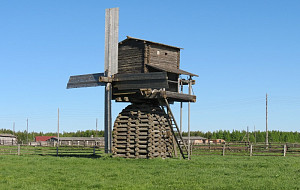
The expedition to Arkhangelsk region and inauguration of Kimzha
The most beautiful village in the Arctic
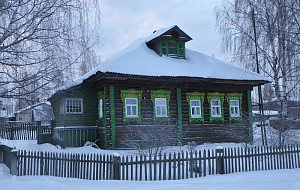
in search of the most beautiful villages
Working visit to Kostroma region
the most beautiful villages of Russia welcome tourists!
About situation in Kinerma
Subscribe to the news of beautiful villages:
Enter your email

123592, Moscow, Marshal Katukov, 20
Tel .: +7 (499) 977-8801
Tel.: +7 (495) 942-7534
E-mail: info@krasaderevni.ru
Tel .: +7 (499) 977-8801
Tel.: +7 (495) 942-7534
E-mail: info@krasaderevni.ru
0 Reviews