


Village Oshevensky Pogost
Arkhangelsk region
since June 5, 2016, 45 points
Attractions
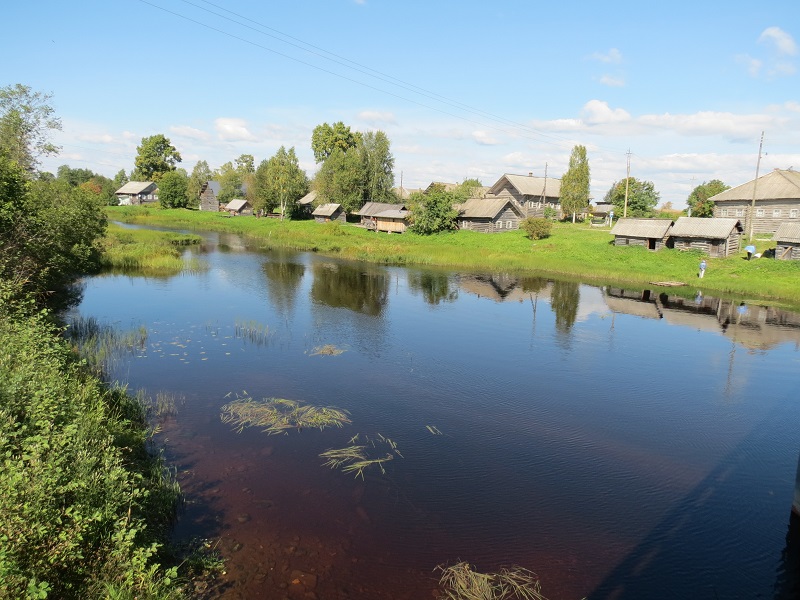
The ancient village of Oshevensk is located in the Kargopol District of the Arkhangelsk Region on the Churyega River, 124 km from the Nyandoma railway station.
This fairly large area encompasses several villages: Shiryaikha, Niz, Pogost, Gar, Bolshoy Khaluy, and Bor.
It boasts a beautiful blend of stone and wooden architectural monuments, preserved and carefully passed down from generation to generation folk crafts and traditions, and a unique landscape.
Oshevensk's main attraction is the Alexander-Oshevensky Monastery, founded in 1453 and the only one remaining in the Kargopol District. The relics of St. Alexander the Wonderworker of Oshevensk, the founder of the holy monastery, rest beneath a crypt.
Opposite the monastery is a "holy grove," a remnant of pagan times. The Oshevensk area is also notable for its wooden architecture, both religious and civic.
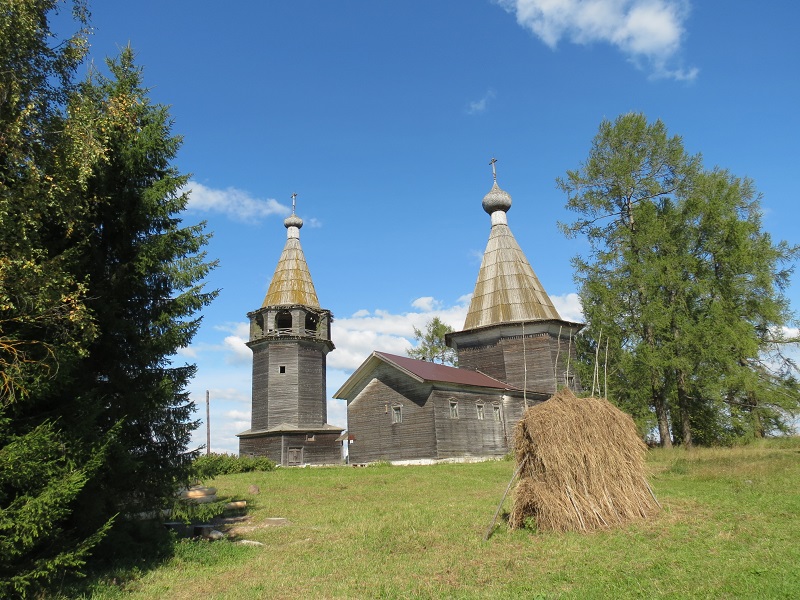
In the village of Pogost, the Epiphany Church, built in 1787, and its bell tower—one of the most striking examples of northern Russian wooden architecture—have survived. A large wooden church with a painted celestial dome and a huge wooden iconostasis, as well as a freestanding bell tower, are well preserved. Both structures are listed as architectural monuments of federal significance.
Another interesting religious monument is located in the village of Niz—the original 19th-century St. George's Chapel. The chapel's double-tented silhouette beautifully enlivens the village outskirts. This small structure, roofed on four slopes, features two slender octagons crowned with tents extending from the roof. The top of the western octagon is open to the sound of bells—this is the bell tower. The chapel's double-tented silhouette beautifully enlivens the village outskirts. A curious detail: a large stone slab sits by the porch, replacing the threshold.
The Ilyinskaya Chapel in the village of Bol'shaya Khaluy, very similar to the St. George Chapel, has its tents and domes restored in 2007, and its roof repaired in 2023.
In the village of Pogost Navolochny, on the banks of the Churyega River, stands the Church of St. George the Victorious, a stone structure. Anyone passing by cannot help but notice the beauty of this church. Crosses have been erected on the sites where a chapel or church once stood.
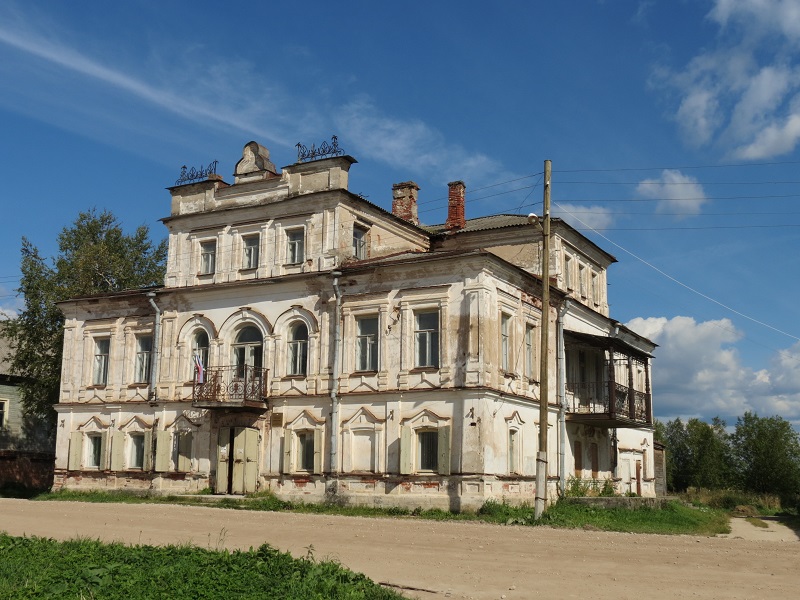
The presence of churches, including active ones where services are held regularly, attracts Orthodox believers to Oshevensk, making Oshevensk rightfully considered one of the spiritual centers of the Kargopol District. Oshevensk retains many preserved civil architecture: for example, in the center of the village of Shiryaikha are several houses from the merchant Druzhinin's estate. One of them houses the "Guest House."
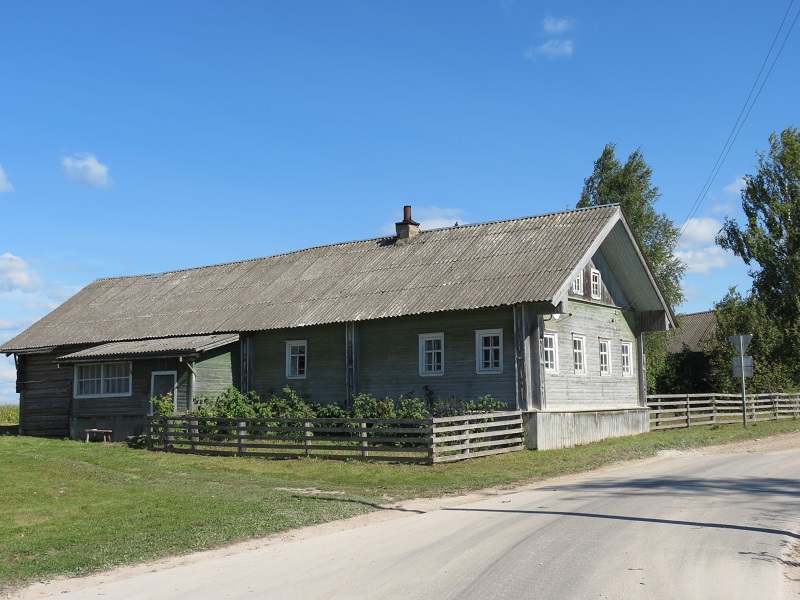
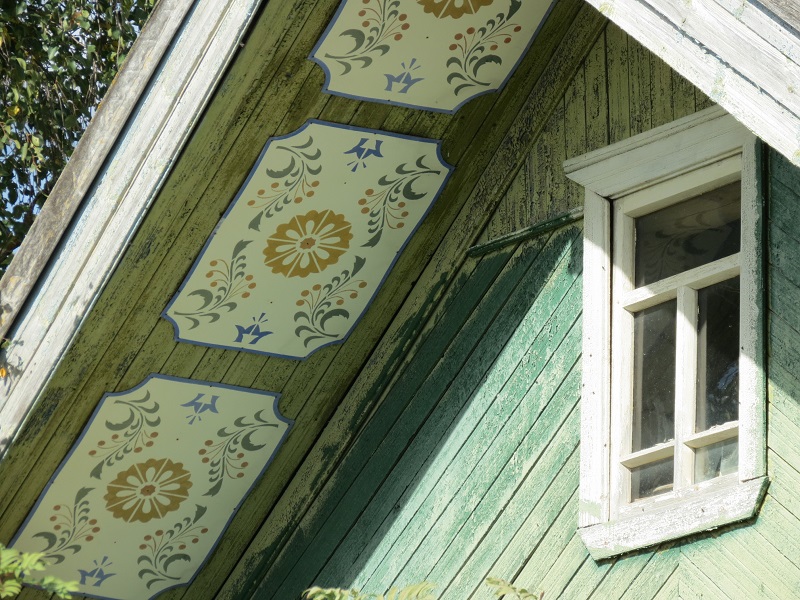
Several smoky (ore) huts also remain. The concept of an ore hut is usually associated with poverty and filth. However, the residents of this once-wealthy village's fondness for a black firebox can be explained by the widespread belief that an ore hut was warmer. These houses stand on high basements and have four windows along the facade. The windows are richly decorated with carved frames and paneled shutters.
Oshevensk is a region rich in unique natural landmarks.
Two large stones with indentations resembling a human footprint are especially revered. These "footprint" boulders recall the cult of sacred stones, which was once widespread among the Eastern Slavs. One of them is located in the village of Pozdyshevskaya, and the other is near the Alexander-Oshevensky Monastery in the "Holy Grove." According to legend, the "footprints" on the stones were left by St. Alexander, so touching them has healing powers. Pilgrims visiting the Alexander-Oshevensky Monastery would step barefoot in these footprints, believing they would quickly heal their illnesses.
In the village of Bolshoy Khaluy, you can see a disappearing river, the subject of legends. It disappears underground and returns after 1.5 kilometers. Many stories and legends are associated with this place: the Kargopol saint Alexander Oshevensky, searching for a site for a monastery, chose a field near the village of Bolshoy Khaluy, named after the river on whose banks the village is located. The location for a monastery was perfect, but the locals were afraid of the monks, so they drove Alexander away (they didn't even let him drink water from the road). He became angry and cursed the villagers, saying, "You will live by the water, but without it."
Near the spot where the water disappears underground, a votive cross stands on the site of a destroyed chapel. There are many votive crosses in Oshevensk. They are built mainly on the sites of former chapels. For the residents of Oshevensk, they are like small churches. People hang ribbons and scarves on the crosses, saying prayers and asking God for help.
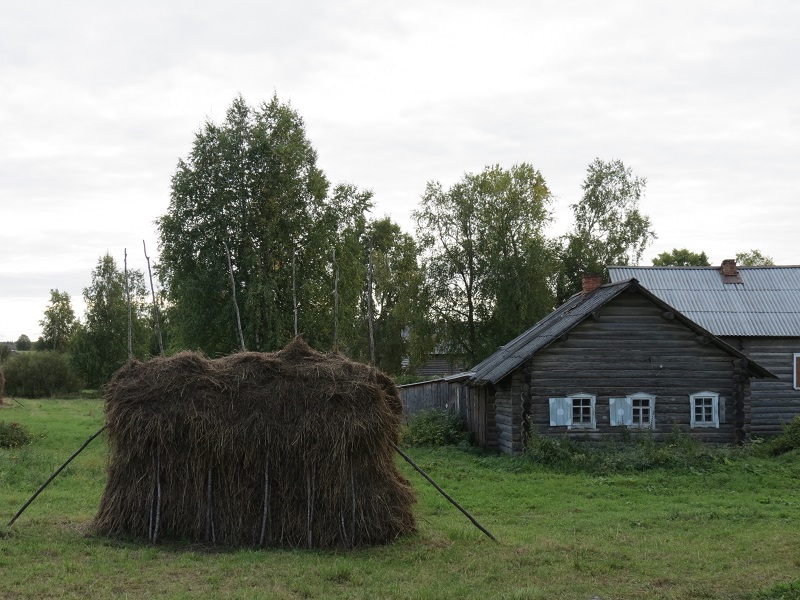
Oshevensk is a unique territory, a piece of primordial Russian land where beautiful human creations—mighty log houses, barns, bathhouses, wells, churches, and chapels—marvelously blend with the vibrant, pristine beauty of nature! This is a small but complete image of ancient Rus', a living page of history!
Food, gastronomy, terroir.
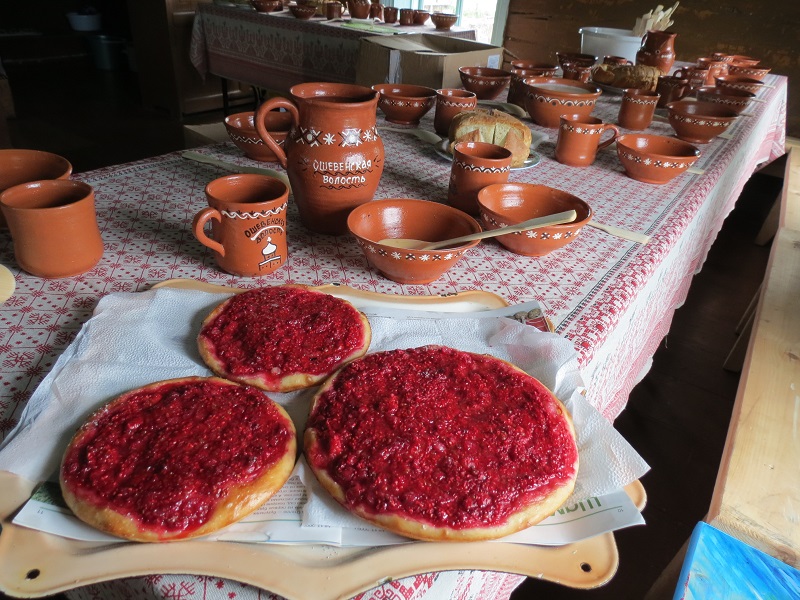
In Oshevensk, the highlight is lunch. Where else but here can you enjoy homemade fish soup from a Russian oven, potatoes with butter, fresh pies, and homemade bread with northern berry jam? Mushrooms still play a large role in the Oshevensk diet. A particularly popular choice are salted red saffron milk caps (saffron milk caps, or saffron milk caps), which are the size of a small coin. Washed red milk caps were placed in a jug or cast-iron pot, generously salted, and shaken (weeded) to thoroughly salt them (which made the mushrooms even redder). Then they were poured into a barrel or tub, covered with a currant leaf to prevent fermentation, and weighted down (pressed down). Fresh saffron milk caps are used to make an open pie similar to a vatrushka (rice cake). During the reign of Peter the Great, the Osheventsy collected this mushroom and sent the harvest to the royal court. An equally curious historical detail is that the saffron milk caps they collected were the size of a coin and no larger than a bottleneck, as it was in this container that they were transported to the capital of the Russian state.
"The dominant main dish on the tables of the Osheventsy and Kargopols is rybnik, that is, a fish pie, not even one, but two almost daily, that is, fresh, salted... on holidays with a white crust, and on weekdays with a... rye crust."
Rybnik is raw fish baked in unleavened dough. They say, "You can eat a loaf of bread with an ash head." Rybnik can be baked with any fish, but the Osheventsy one is prepared with pike on a thin rye crust, infused with its own fish juices. And, from time immemorial to this day, Oshevenye has been famous for its ancient ritual cookies, "teterki." In the spring, at the solar equinox—when day and night meet—they bake "teterki." Elderly women say that in the past, on "teterki day," everyone from the bride's side of the family would bring the newlyweds gifts—teterki of their own making. And the bride's mother would bring the most, lest she be thought stingy, and so that every member of the household would eat at least one that day. Teterki is a painstaking craft; the housewife could hardly manage it in a week. So, the whole family would help. Together, they would wind (or roll) one hundred or two hundred teterki, arranging them in various patterns. Some of them are made from the finest semolina flour, adding hempseed (for the son-in-law), some are baked from rye flour, and the rest are made from barley. Even today, children still make black grouse for fun. Grandma will start cooking dinner, knead two handfuls of flour, and bake a black grouse for each grandchild.
You can order an Oshevensk-style lunch and a black grouse-making master class at the following address: Arkhangelsk Region, Kargopolsky District, Shiryaikha village (Oshevensk), ul. Tsentralnaya, Bldg. 20. Tel.: +7 911 056 11 55; 8818-41-2-17-04
Accommodation
GUEST HOUSE Address: Arkhangelsk Region, Kargopolsky District, Shiryaikha village (Oshevensk), ul. Centralnaya St., Building 20
Tel.: +7 911 056 11 55; +7 818-41-2-17-04
The guesthouse is located in an old two-story merchant's house, built between the late 19th and early 20th centuries. It is a rustic, interactive museum of traditional northern life, furnished with antique chests and spinning wheels, beds and furniture, and kitchen utensils. There are two rooms: a triple and a quadruple. Central heating, a heated toilet, a bathroom with a water heater, and a microwave are available. A large dining room is available for dining and entertaining. The "Grouse Museum" is located on the ground floor.
Getting there
From Moscow:
- By car on the M8 / Route: Moscow - Velsk - Nyandoma - Kargopol - Shiryaikha (Oshevensk) / Distance ~1200 km
- By train Moscow - Arkhangelsk to Nyandoma station, then 2 hours by taxi or bus via Kargopol to Oshevensk/Shiryaikha village
From St. Petersburg:
- By car on the P21 / Route: St. Petersburg - Lodeynoye Pole - Podporozhye - Vytegra - Pudozh - Kargopol - Shiryaikha (Oshevensk) / Distance ~800 km
- By train St. Petersburg - Arkhangelsk to Nyandoma station, then 2 hours by taxi or bus via Kargopol to Oshevensk/Shiryaikha village
From Arkhangelsk:
- By car on the M8 and P1 / Route: Arkhangelsk - Brin-Navolok - Plesetsk - Shelokhovskaya - Shiryaikha (Oshevensk) / distance ~500 km
- Take the Arkhangelsk-Kargopol bus, then a 2-hour taxi or bus ride to Oshevensk/Shiryaikha village
- Take the train to Nyandoma station, then a 2-hour taxi or bus ride via Kargopol to Oshevensk/Shiryaikha village
Museums
TETYORKA MUSEUM (ritual cookies)
Address: Arkhangelsk Region, Kargopolsky District, Shiryaikha village (Oshevensk), 20 Tsentralnaya Street
Tel: +7 911 056 11 55; 8818-41-2-17-04
By appointment only.
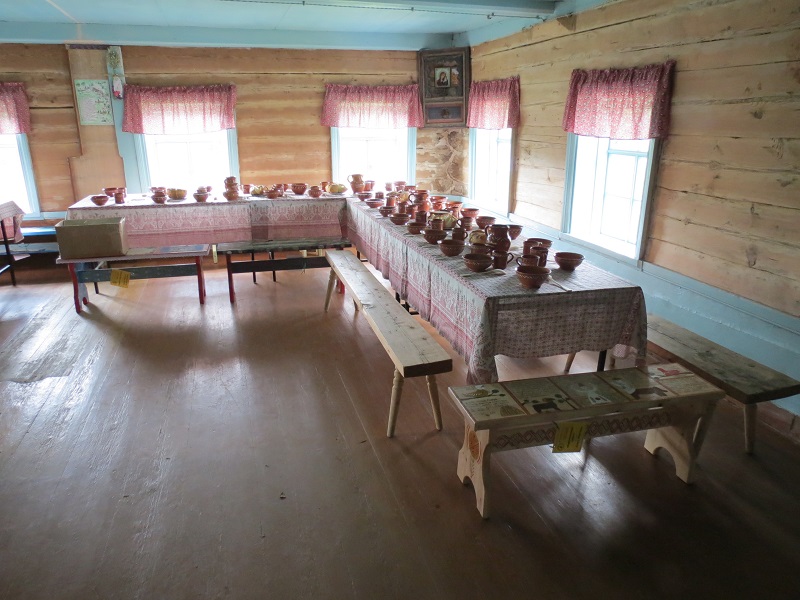
The Tetyorka Museum is a vibrant, interactive space, unique in the Kargopolsky District.
The museum's exhibition space is the work of artisans from Kargopol and Oshevensk. On a museum tour, you'll not only learn about the traditions and rituals associated with the ceremonial "Tetyorka" cookies, but also participate in a series of master classes. For example, you'll learn how to weigh grain with a steelyard, or you can grind flour on antique millstones, or create a "Tetyorka" cookie using E. I. Dikova's designs. The museum also displays traditional Osheven wedding costumes and wedding garlands.
Event Calendar
"Grass Grouse Festival" takes place in March in the village of Oshevensk. It is the only festival in Russia celebrating the ritual cookie "Grass Grouse." The program includes an interactive performance, a black grouse workshop, a tour of the "Grouse Grouse Museum," and a village lunch.
"Memorial Day of St. Alexander, Abbot of Oshevensk" On May 3, the Holy Dormition Alexander-Oshevensk Monastery hosts celebrations dedicated to the memory of the monastery's founder, St. Alexander Oshevensk. On the feast day, Divine Liturgy is celebrated in the monastery's Nikolsky Gate Church, followed by a procession with the cross and a shared meal.
"Oshevensk Cross Procession" This event takes place in the Kargopol District, usually in August. Pilgrims set off on a 55-kilometer journey from Kargopol and conclude their journey at the Alexander-Oshevensk Monastery. The procession is led by the ruling bishop, Bishop Alexander of Plesetsk and Kargopol. All the churches along the way are visited. The tradition of holding a religious procession to the Alexander-Oshevensky Monastery was revived in 2013 and timed to coincide with the 1025th anniversary of the Baptism of Rus' and the feast of the Dormition of the Mother of God—the monastery's patronal feast.
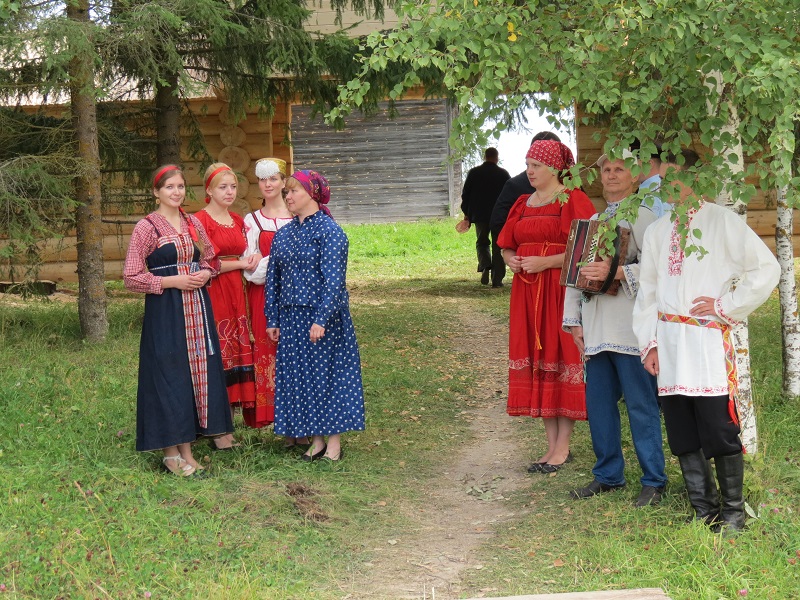
"Oshevensky Wedding" A wedding is a special celebration in everyone's life. Preparations for the wedding ceremony begin long before the main moment. Modern weddings are conducted very differently from those in pre-revolutionary Russia. The subtleties and elements of the wedding ceremony, as well as wedding traditions, have long been forgotten. But in Kargopol, wedding traditions have survived in their entirety. The wedding ceremony "After the Wedding" offers an opportunity to participate in an ancient wedding ceremony from the 19th and 20th centuries. The entire event begins with the newlyweds and guests being dressed in period costumes, followed by a greeting of the newlyweds and a blessing from their parents. The centerpiece of the celebration is the wedding feast, consisting of 12 courses, each served in a strict order. All dishes are cooked in a Russian stove. Once the guests have finished eating, it's time to celebrate, dance in circles, and dance square dances. Finally, a special wedding dish is served exclusively at the end of the celebration. Ancient Osheven wedding rites are performed not only for local newlyweds but also for young couples from other cities.
Useful links
Tetyorka Museum https://kargopoltic.arkh.muzkult.ru/museumteterci
Kargopol District Bus Schedule https://kargopoltic.arkh.muzkult.ru/raspisanie
The ancient village of Oshevensk is located in the Kargopol District of the Arkhangelsk Region on the Churyega River, 124 km from the Nyandoma railway station.
This fairly large area encompasses several villages: Shiryaikha, Niz, Pogost, Gar, Bolshoy Khaluy, and Bor.
It boasts a beautiful blend of stone and wooden architectural monuments, preserved and carefully passed down from generation to generation folk crafts and traditions, and a unique landscape.
Oshevensk's main attraction is the Alexander-Oshevensky Monastery, founded in 1453 and the only one remaining in the Kargopol District. The relics of St. Alexander the Wonderworker of Oshevensk, the founder of the holy monastery, rest beneath a crypt.
Opposite the monastery is a "holy grove," a remnant of pagan times. The Oshevensk area is also notable for its wooden architecture, both religious and civic.
In the village of Pogost, the Epiphany Church, built in 1787, and its bell tower—one of the most striking examples of northern Russian wooden architecture—have survived. A large wooden church with a painted celestial dome and a huge wooden iconostasis, as well as a freestanding bell tower, are well preserved. Both structures are listed as architectural monuments of federal significance.
Another interesting religious monument is located in the village of Niz—the original 19th-century St. George's Chapel. The chapel's double-tented silhouette beautifully enlivens the village outskirts. This small structure, roofed on four slopes, features two slender octagons crowned with tents extending from the roof. The top of the western octagon is open to the sound of bells—this is the bell tower. The chapel's double-tented silhouette beautifully enlivens the village outskirts. A curious detail: a large stone slab sits by the porch, replacing the threshold.
The Ilyinskaya Chapel in the village of Bol'shaya Khaluy, very similar to the St. George Chapel, has its tents and domes restored in 2007, and its roof repaired in 2023.
In the village of Pogost Navolochny, on the banks of the Churyega River, stands the Church of St. George the Victorious, a stone structure. Anyone passing by cannot help but notice the beauty of this church. Crosses have been erected on the sites where a chapel or church once stood.
The presence of churches, including active ones where services are held regularly, attracts Orthodox believers to Oshevensk, making Oshevensk rightfully considered one of the spiritual centers of the Kargopol District. Oshevensk retains many preserved civil architecture: for example, in the center of the village of Shiryaikha are several houses from the merchant Druzhinin's estate. One of them houses the "Guest House."
Several smoky (ore) huts also remain. The concept of an ore hut is usually associated with poverty and filth. However, the residents of this once-wealthy village's fondness for a black firebox can be explained by the widespread belief that an ore hut was warmer. These houses stand on high basements and have four windows along the facade. The windows are richly decorated with carved frames and paneled shutters.
Oshevensk is a region rich in unique natural landmarks.
Two large stones with indentations resembling a human footprint are especially revered. These "footprint" boulders recall the cult of sacred stones, which was once widespread among the Eastern Slavs. One of them is located in the village of Pozdyshevskaya, and the other is near the Alexander-Oshevensky Monastery in the "Holy Grove." According to legend, the "footprints" on the stones were left by St. Alexander, so touching them has healing powers. Pilgrims visiting the Alexander-Oshevensky Monastery would step barefoot in these footprints, believing they would quickly heal their illnesses.
In the village of Bolshoy Khaluy, you can see a disappearing river, the subject of legends. It disappears underground and returns after 1.5 kilometers. Many stories and legends are associated with this place: the Kargopol saint Alexander Oshevensky, searching for a site for a monastery, chose a field near the village of Bolshoy Khaluy, named after the river on whose banks the village is located. The location for a monastery was perfect, but the locals were afraid of the monks, so they drove Alexander away (they didn't even let him drink water from the road). He became angry and cursed the villagers, saying, "You will live by the water, but without it."
Near the spot where the water disappears underground, a votive cross stands on the site of a destroyed chapel. There are many votive crosses in Oshevensk. They are built mainly on the sites of former chapels. For the residents of Oshevensk, they are like small churches. People hang ribbons and scarves on the crosses, saying prayers and asking God for help.
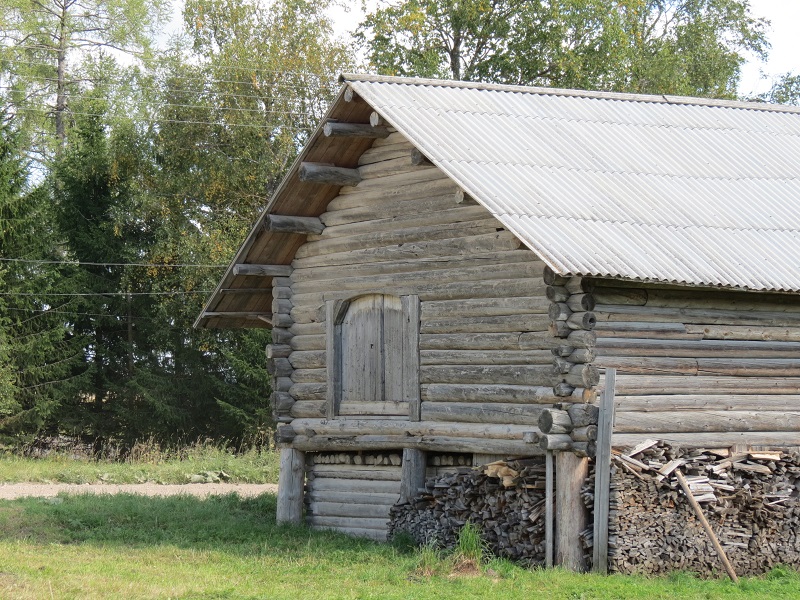
Oshevensk is a unique territory, a piece of primordial Russian land where beautiful human creations—mighty log houses, barns, bathhouses, wells, churches, and chapels—marvelously blend with the vibrant, pristine beauty of nature! This is a small but complete image of ancient Rus', a living page of history!
Food, gastronomy, terroir.
In Oshevensk, the highlight is lunch. Where else but here can you enjoy homemade fish soup from a Russian oven, potatoes with butter, fresh pies, and homemade bread with northern berry jam? Mushrooms still play a large role in the Oshevensk diet. A particularly popular choice are salted red saffron milk caps (saffron milk caps, or saffron milk caps), which are the size of a small coin. Washed red milk caps were placed in a jug or cast-iron pot, generously salted, and shaken (weeded) to thoroughly salt them (which made the mushrooms even redder). Then they were poured into a barrel or tub, covered with a currant leaf to prevent fermentation, and weighted down (pressed down). Fresh saffron milk caps are used to make an open pie similar to a vatrushka (rice cake). During the reign of Peter the Great, the Osheventsy collected this mushroom and sent the harvest to the royal court. An equally curious historical detail is that the saffron milk caps they collected were the size of a coin and no larger than a bottleneck, as it was in this container that they were transported to the capital of the Russian state.
"The dominant main dish on the tables of the Osheventsy and Kargopols is rybnik, that is, a fish pie, not even one, but two almost daily, that is, fresh, salted... on holidays with a white crust, and on weekdays with a... rye crust."
Rybnik is raw fish baked in unleavened dough. They say, "You can eat a loaf of bread with an ash head." Rybnik can be baked with any fish, but the Osheventsy one is prepared with pike on a thin rye crust, infused with its own fish juices. And, from time immemorial to this day, Oshevenye has been famous for its ancient ritual cookies, "teterki." In the spring, at the solar equinox—when day and night meet—they bake "teterki." Elderly women say that in the past, on "teterki day," everyone from the bride's side of the family would bring the newlyweds gifts—teterki of their own making. And the bride's mother would bring the most, lest she be thought stingy, and so that every member of the household would eat at least one that day. Teterki is a painstaking craft; the housewife could hardly manage it in a week. So, the whole family would help. Together, they would wind (or roll) one hundred or two hundred teterki, arranging them in various patterns. Some of them are made from the finest semolina flour, adding hempseed (for the son-in-law), some are baked from rye flour, and the rest are made from barley. Even today, children still make black grouse for fun. Grandma will start cooking dinner, knead two handfuls of flour, and bake a black grouse for each grandchild.
You can order an Oshevensk-style lunch and a black grouse-making master class at the following address: Arkhangelsk Region, Kargopolsky District, Shiryaikha village (Oshevensk), ul. Tsentralnaya, Bldg. 20. Tel.: +7 911 056 11 55; 8818-41-2-17-04
Accommodation
GUEST HOUSE Address: Arkhangelsk Region, Kargopolsky District, Shiryaikha village (Oshevensk), ul. Centralnaya St., Building 20
Tel.: +7 911 056 11 55; +7 818-41-2-17-04
The guesthouse is located in an old two-story merchant's house, built between the late 19th and early 20th centuries. It is a rustic, interactive museum of traditional northern life, furnished with antique chests and spinning wheels, beds and furniture, and kitchen utensils. There are two rooms: a triple and a quadruple. Central heating, a heated toilet, a bathroom with a water heater, and a microwave are available. A large dining room is available for dining and entertaining. The "Grouse Museum" is located on the ground floor.
Getting there
From Moscow:
- By car on the M8 / Route: Moscow - Velsk - Nyandoma - Kargopol - Shiryaikha (Oshevensk) / Distance ~1200 km
- By train Moscow - Arkhangelsk to Nyandoma station, then 2 hours by taxi or bus via Kargopol to Oshevensk/Shiryaikha village
From St. Petersburg:
- By car on the P21 / Route: St. Petersburg - Lodeynoye Pole - Podporozhye - Vytegra - Pudozh - Kargopol - Shiryaikha (Oshevensk) / Distance ~800 km
- By train St. Petersburg - Arkhangelsk to Nyandoma station, then 2 hours by taxi or bus via Kargopol to Oshevensk/Shiryaikha village
From Arkhangelsk:
- By car on the M8 and P1 / Route: Arkhangelsk - Brin-Navolok - Plesetsk - Shelokhovskaya - Shiryaikha (Oshevensk) / distance ~500 km
- Take the Arkhangelsk-Kargopol bus, then a 2-hour taxi or bus ride to Oshevensk/Shiryaikha village
- Take the train to Nyandoma station, then a 2-hour taxi or bus ride via Kargopol to Oshevensk/Shiryaikha village
Museums
TETYORKA MUSEUM (ritual cookies)
Address: Arkhangelsk Region, Kargopolsky District, Shiryaikha village (Oshevensk), 20 Tsentralnaya Street
Tel: +7 911 056 11 55; 8818-41-2-17-04
By appointment only.
The Tetyorka Museum is a vibrant, interactive space, unique in the Kargopolsky District.
The museum's exhibition space is the work of artisans from Kargopol and Oshevensk. On a museum tour, you'll not only learn about the traditions and rituals associated with the ceremonial "Tetyorka" cookies, but also participate in a series of master classes. For example, you'll learn how to weigh grain with a steelyard, or you can grind flour on antique millstones, or create a "Tetyorka" cookie using E. I. Dikova's designs. The museum also displays traditional Osheven wedding costumes and wedding garlands.
Event Calendar
"Grass Grouse Festival" takes place in March in the village of Oshevensk. It is the only festival in Russia celebrating the ritual cookie "Grass Grouse." The program includes an interactive performance, a black grouse workshop, a tour of the "Grouse Grouse Museum," and a village lunch.
"Memorial Day of St. Alexander, Abbot of Oshevensk" On May 3, the Holy Dormition Alexander-Oshevensk Monastery hosts celebrations dedicated to the memory of the monastery's founder, St. Alexander Oshevensk. On the feast day, Divine Liturgy is celebrated in the monastery's Nikolsky Gate Church, followed by a procession with the cross and a shared meal.
"Oshevensk Cross Procession" This event takes place in the Kargopol District, usually in August. Pilgrims set off on a 55-kilometer journey from Kargopol and conclude their journey at the Alexander-Oshevensk Monastery. The procession is led by the ruling bishop, Bishop Alexander of Plesetsk and Kargopol. All the churches along the way are visited. The tradition of holding a religious procession to the Alexander-Oshevensky Monastery was revived in 2013 and timed to coincide with the 1025th anniversary of the Baptism of Rus' and the feast of the Dormition of the Mother of God—the monastery's patronal feast.
"Oshevensky Wedding" A wedding is a special celebration in everyone's life. Preparations for the wedding ceremony begin long before the main moment. Modern weddings are conducted very differently from those in pre-revolutionary Russia. The subtleties and elements of the wedding ceremony, as well as wedding traditions, have long been forgotten. But in Kargopol, wedding traditions have survived in their entirety. The wedding ceremony "After the Wedding" offers an opportunity to participate in an ancient wedding ceremony from the 19th and 20th centuries. The entire event begins with the newlyweds and guests being dressed in period costumes, followed by a greeting of the newlyweds and a blessing from their parents. The centerpiece of the celebration is the wedding feast, consisting of 12 courses, each served in a strict order. All dishes are cooked in a Russian stove. Once the guests have finished eating, it's time to celebrate, dance in circles, and dance square dances. Finally, a special wedding dish is served exclusively at the end of the celebration. Ancient Osheven wedding rites are performed not only for local newlyweds but also for young couples from other cities.
Useful links
Tetyorka Museum https://kargopoltic.arkh.muzkult.ru/museumteterci
Kargopol District Bus Schedule https://kargopoltic.arkh.muzkult.ru/raspisanie
Video

Oshevensky Pogost - the most beautiful village of Russia

Opening of the museum Oshevenskaya volost

Journey to Oshevensk. Bridge

Journey to Oshevensk 2. Church of the Epiphany
Map of villages
Contacts
+7 (81841) 3-51-51
164132, Arkhangelsk region, Kargopol district, Shiryaikha vill., Tsentralnaya str., 24
News
The expedition to Arkhangelsk region and inauguration of Kimzha
The most beautiful village in the Arctic
in search of the most beautiful villages
Working visit to Kostroma region

the most beautiful villages of Russia welcome tourists!
About situation in Kinerma
Subscribe to the news of beautiful villages:
Enter your email

123592, Moscow, Marshal Katukov, 20
Tel .: +7 (499) 977-8801
Tel.: +7 (495) 942-7534
E-mail: info@krasaderevni.ru
Tel .: +7 (499) 977-8801
Tel.: +7 (495) 942-7534
E-mail: info@krasaderevni.ru
0 Reviews