


Village Bolshoy Kunaley
Republic of Buryatia
since October 18, 2018, 47 points
The village of Bolshoy Kunaley in the Tarbagatai District of the Republic of Buryatia is one of the most significant centers for the preservation of the distinctive Russian culture of the Old Believers, known as the Semeyskie culture of Transbaikalia. The uniqueness of this heritage has been confirmed at the highest level: in May 2001, UNESCO declared the Semeyskie culture a "Masterpiece of the Oral and Intangible Heritage of Humanity." Recognizing its historical preservation and aesthetic value, Bolshoy Kunaley was officially included in the Association of the Most Beautiful Villages and Towns of Russia on July 3, 2018. The village is a must-see for independent travelers interested in the profound authenticity and visual beauty of Russian village life.
Brief History
The village of Bolshoy Kunaley was founded in 1765, when Old Believers exiled to Siberia arrived here. The Semeiskie chose a picturesque location for their settlement, where the mountain spurs merged into a valley. The village's name comes from the Buryat word "khunilla," which translates as "gathering" or "folding," reflecting its geographical location. Initially, 61 log cabins were built here, where 205 settlers settled.
The first settlers explored the difficult and virtually uninhabitable taiga, but thanks to their incredible hard work and desire for freedom, they persevered and developed a community. By 1845, 267 Old Believer families lived in the village. The Old Believers demonstrated a high degree of self-organization: for example, they arbitrarily built a wooden church in 1833-1834.
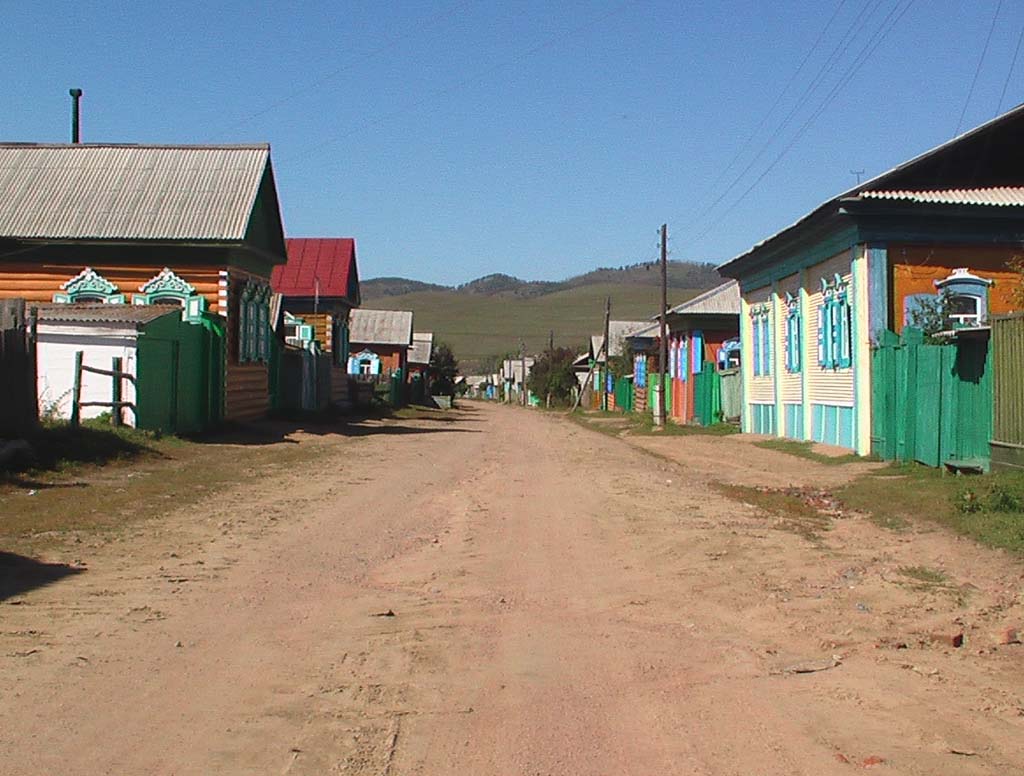
The community's economic foundation was developed through agricultural agriculture. At the beginning of the 20th century, 27 watermills and 17 forges were operating in Bolshoy Kunaley, indicating a high level of production and prosperity. Exceptional amenities and cleanliness distinguished the village as early as 1935: Bolshoy Kunaley was named a leading village for urban improvement, and its streets were exceptionally clean, rivaling even those of large cities such as Irkutsk and Ulan-Ude.
Sights and Nature
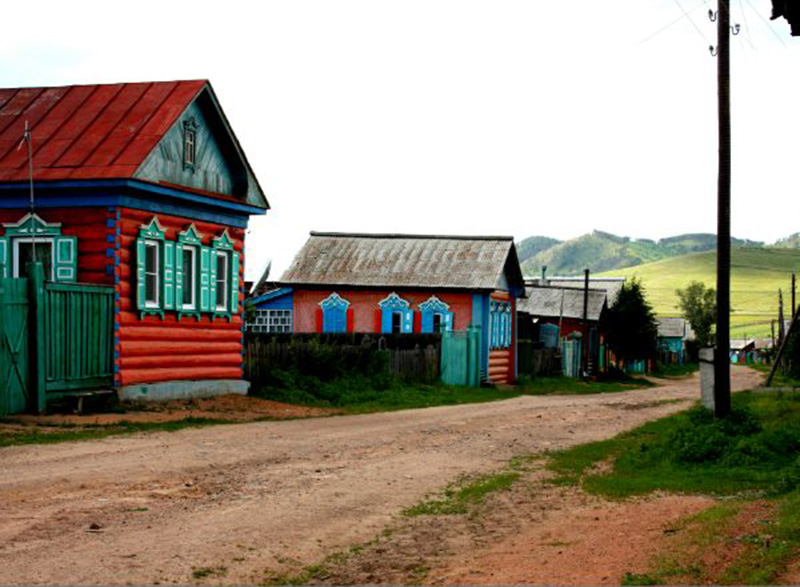
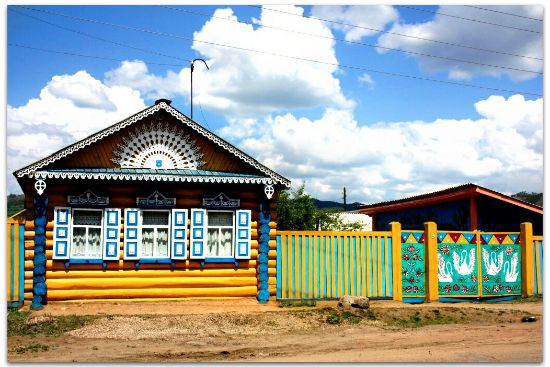
The main attraction of Bolshoy Kunaley is not a single monument, but the unique cultural landscape itself. The street architecture is distinguished by its straightforwardness and exceptional neatness, maintained by local residents for centuries. The residential buildings are fine examples of Siberian wooden architecture.
The village's calling card is its rich decorative design: the building facades, carved window frames, and gates are traditionally painted in multicolored paints. This vibrant palette not only helps preserve the wood but also creates a special sense of celebration. Clean courtyards and well-kept estates with an abundance of flowers and greenery are a traditional Semey character trait and a key visual feature.
The village's natural backdrop is picturesque, as it is located where mountain spurs merge into valleys. Ten kilometers east of the village outskirts lies the picturesque Luzhki area. Here, you can see a combination of forest glades, meadow landscapes, and rock outcrops. The most famous of these, Luzhkovy Kamen, consists of several monoliths and offers a stunning panoramic view of the Kunaleyka River valley and the village of Bolshoy Kunaley itself.
Among the intangible heritage sites, the Bolshoy Kunaley Semey Folk Choir, founded in 1927, stands out.
Accommodation
In Bolshoy Kunaley, tourists are offered the opportunity to deeply immerse themselves in traditional village life. The main accommodation option is private guesthouses, often located in traditional Semeiskie homes. This type of accommodation allows lovers of heritage and the village lifestyle to appreciate the traditional interior and way of life.
Local families can provide comprehensive tourist services, including not only accommodation but also traditional meals and cultural support. Independent travelers are advised to plan and book their accommodation in advance using the official tourism resources of the Tarbagatai District.
Food
Semeiskie cuisine is an important part of their intangible heritage. The cuisine is based on agricultural and livestock products, reflecting the village's developed agricultural history.
The diet reflects the strict requirements of the Old Believer religious calendar and includes the observance of numerous fasts, ensuring a rich variety of vegetarian and Lenten dishes.
Baked goods play a central role in the diet. Key dishes offered to guests include traditional Siberian shangi (open pies) with various fillings, as well as rich pies and thick breads. Many dishes are cooked for a long time in a Russian oven, which imparts a distinctive, unique flavor and texture.
Museums
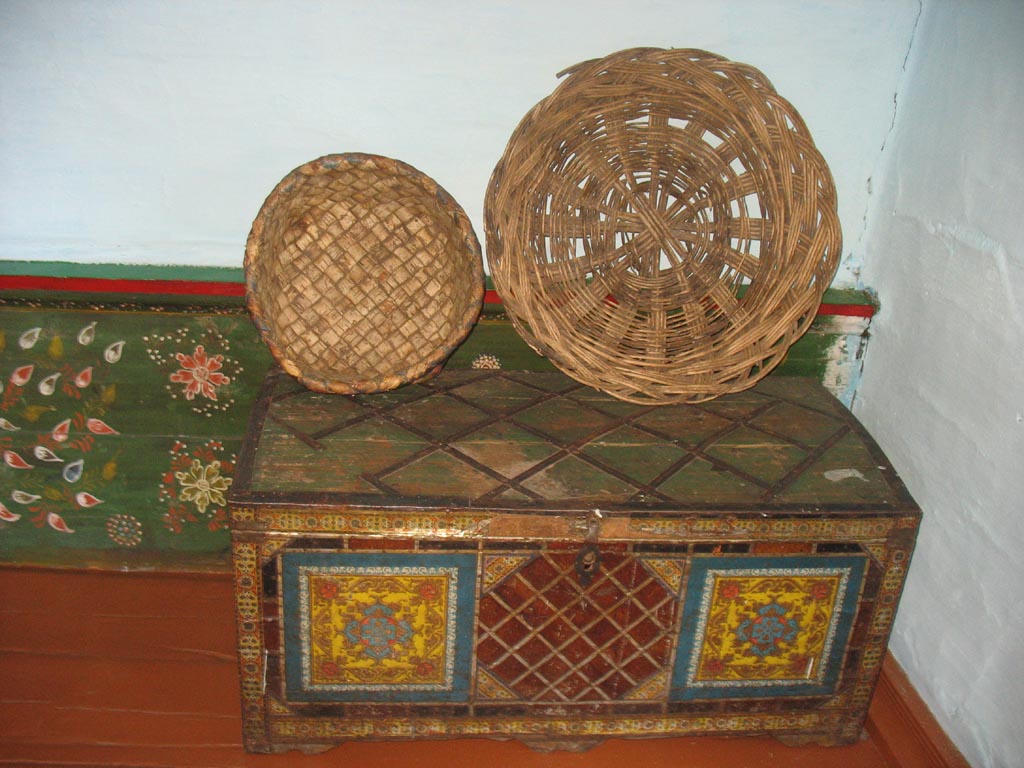
To explore the material and spiritual culture of the Semeiskie, the Transbaikal Old Believer Estate Museum (also known as the Museum of the Material Culture of the Old Believers of Transbaikalia) is located in the village of Bolshoy Kunaley. The exhibition features household utensils, pottery and cooperage items, a collection of samovars, and agricultural tools. Particular attention is paid to traditional costumes, church books, and icons, emphasizing the spiritual foundation of cultural preservation.
Critical: A visit to the Estate Museum requires prior reservation.
For a more comprehensive introduction to UNESCO heritage, we recommend visiting neighboring Tarbagatai, where the Tarbagatai Folk Museum "Semeiskie Antiquity" has been operating since 1982. Its collection contains unique items: lestovkas (prayer beads), antique Semeiskie chests, traditional clothing (sarafans, kichkas, kokoshniks), and tools (wood plows, spinning wheels). Since 2019, the museum has hosted a craftsmen's association, the "House of Crafts," where folk crafts such as costume sewing, belt weaving, patchwork, and wood painting are developed.
Calendar of Events
The Bolshoi Kunaley calendar of events is closely linked to agricultural cycles and Old Believer religious holidays.
Folk festivals and ritual celebrations, such as Maslenitsa, Trinity, and Christmas, offer the opportunity to experience the intangible heritage of the Semeiskie family in action. These celebrations often feature reenactments of traditional Old Believer wedding ceremonies, renowned for their ancient polyphonic chant.
Seasonal craft and food fairs are held during the warmer months. Here, craft enthusiasts can purchase authentic items, such as pottery or cooperage, and sample traditional baked goods. Tourists interested in ethnography should monitor announcements in advance, as the area may host interregional festivals dedicated to Old Believer folklore.
How to get there
Bolshoy Kunalei is located in the Tarbagatai District, approximately 75 kilometers from Ulan-Ude, the capital of Buryatia.
Traveling by car
For independent travelers, traveling by car is the most convenient and flexible option. The distance by road is approximately 71 kilometers. The estimated travel time is approximately one hour. The route does not include toll roads.
Public transportation
You can reach the village by bus number 441, which departs from the Baikal Bus Station in Ulan-Ude.
Direct buses to Bolshoy Kunalei from Ulan-Ude: On weekdays and weekends, direct departures operate at 11:00 AM and 4:00 PM. Return flights from Bolshoy Kunaley: Tourists should be aware that return flights are limited. On weekends, departures are only at 6:10 AM and 1:00 PM.
Useful Information
Bolshoy Kunaley is the administrative center of the Bolshekunaleiskoye rural settlement. The village has historically been considered "at the forefront of public amenities." Exceptional street cleanliness and order are an integral part of the Semeiskie identity, and tourists are required to strictly adhere to this.
When interacting with local residents, it is recommended to exercise politeness and restraint, especially when taking photographs, to respect their privacy. Craft enthusiasts can purchase authentic items made by local artisans, thereby upholding the traditions of weaving, pottery, and cooperage, which are represented in museum collections.
The culture of the Semeiskie people of Transbaikalia, preserved in Bolshoy Kunaley, is the only Russian site designated a "Masterpiece of the Oral and Intangible Heritage of Humanity" by UNESCO.
Just like the homes of the Old Believers, where cleanliness and order are meticulously maintained, a visit to Bolshoy Kunaley requires a respect for this way of life. Immersing yourself in the Old Believer culture is like opening an ancient chest, where every item, from a carved door frame to a traditional lestovka, preserves an unchanging history, passed down through the centuries.
Photo: A. Romanov
Brief History
The village of Bolshoy Kunaley was founded in 1765, when Old Believers exiled to Siberia arrived here. The Semeiskie chose a picturesque location for their settlement, where the mountain spurs merged into a valley. The village's name comes from the Buryat word "khunilla," which translates as "gathering" or "folding," reflecting its geographical location. Initially, 61 log cabins were built here, where 205 settlers settled.
The first settlers explored the difficult and virtually uninhabitable taiga, but thanks to their incredible hard work and desire for freedom, they persevered and developed a community. By 1845, 267 Old Believer families lived in the village. The Old Believers demonstrated a high degree of self-organization: for example, they arbitrarily built a wooden church in 1833-1834.
The community's economic foundation was developed through agricultural agriculture. At the beginning of the 20th century, 27 watermills and 17 forges were operating in Bolshoy Kunaley, indicating a high level of production and prosperity. Exceptional amenities and cleanliness distinguished the village as early as 1935: Bolshoy Kunaley was named a leading village for urban improvement, and its streets were exceptionally clean, rivaling even those of large cities such as Irkutsk and Ulan-Ude.
Sights and Nature
The main attraction of Bolshoy Kunaley is not a single monument, but the unique cultural landscape itself. The street architecture is distinguished by its straightforwardness and exceptional neatness, maintained by local residents for centuries. The residential buildings are fine examples of Siberian wooden architecture.
The village's calling card is its rich decorative design: the building facades, carved window frames, and gates are traditionally painted in multicolored paints. This vibrant palette not only helps preserve the wood but also creates a special sense of celebration. Clean courtyards and well-kept estates with an abundance of flowers and greenery are a traditional Semey character trait and a key visual feature.
The village's natural backdrop is picturesque, as it is located where mountain spurs merge into valleys. Ten kilometers east of the village outskirts lies the picturesque Luzhki area. Here, you can see a combination of forest glades, meadow landscapes, and rock outcrops. The most famous of these, Luzhkovy Kamen, consists of several monoliths and offers a stunning panoramic view of the Kunaleyka River valley and the village of Bolshoy Kunaley itself.
Among the intangible heritage sites, the Bolshoy Kunaley Semey Folk Choir, founded in 1927, stands out.
Accommodation
In Bolshoy Kunaley, tourists are offered the opportunity to deeply immerse themselves in traditional village life. The main accommodation option is private guesthouses, often located in traditional Semeiskie homes. This type of accommodation allows lovers of heritage and the village lifestyle to appreciate the traditional interior and way of life.
Local families can provide comprehensive tourist services, including not only accommodation but also traditional meals and cultural support. Independent travelers are advised to plan and book their accommodation in advance using the official tourism resources of the Tarbagatai District.
Food
Semeiskie cuisine is an important part of their intangible heritage. The cuisine is based on agricultural and livestock products, reflecting the village's developed agricultural history.
The diet reflects the strict requirements of the Old Believer religious calendar and includes the observance of numerous fasts, ensuring a rich variety of vegetarian and Lenten dishes.
Baked goods play a central role in the diet. Key dishes offered to guests include traditional Siberian shangi (open pies) with various fillings, as well as rich pies and thick breads. Many dishes are cooked for a long time in a Russian oven, which imparts a distinctive, unique flavor and texture.
Museums
To explore the material and spiritual culture of the Semeiskie, the Transbaikal Old Believer Estate Museum (also known as the Museum of the Material Culture of the Old Believers of Transbaikalia) is located in the village of Bolshoy Kunaley. The exhibition features household utensils, pottery and cooperage items, a collection of samovars, and agricultural tools. Particular attention is paid to traditional costumes, church books, and icons, emphasizing the spiritual foundation of cultural preservation.
Critical: A visit to the Estate Museum requires prior reservation.
For a more comprehensive introduction to UNESCO heritage, we recommend visiting neighboring Tarbagatai, where the Tarbagatai Folk Museum "Semeiskie Antiquity" has been operating since 1982. Its collection contains unique items: lestovkas (prayer beads), antique Semeiskie chests, traditional clothing (sarafans, kichkas, kokoshniks), and tools (wood plows, spinning wheels). Since 2019, the museum has hosted a craftsmen's association, the "House of Crafts," where folk crafts such as costume sewing, belt weaving, patchwork, and wood painting are developed.
Calendar of Events
The Bolshoi Kunaley calendar of events is closely linked to agricultural cycles and Old Believer religious holidays.
Folk festivals and ritual celebrations, such as Maslenitsa, Trinity, and Christmas, offer the opportunity to experience the intangible heritage of the Semeiskie family in action. These celebrations often feature reenactments of traditional Old Believer wedding ceremonies, renowned for their ancient polyphonic chant.
Seasonal craft and food fairs are held during the warmer months. Here, craft enthusiasts can purchase authentic items, such as pottery or cooperage, and sample traditional baked goods. Tourists interested in ethnography should monitor announcements in advance, as the area may host interregional festivals dedicated to Old Believer folklore.
How to get there
Bolshoy Kunalei is located in the Tarbagatai District, approximately 75 kilometers from Ulan-Ude, the capital of Buryatia.
Traveling by car
For independent travelers, traveling by car is the most convenient and flexible option. The distance by road is approximately 71 kilometers. The estimated travel time is approximately one hour. The route does not include toll roads.
Public transportation
You can reach the village by bus number 441, which departs from the Baikal Bus Station in Ulan-Ude.
Direct buses to Bolshoy Kunalei from Ulan-Ude: On weekdays and weekends, direct departures operate at 11:00 AM and 4:00 PM. Return flights from Bolshoy Kunaley: Tourists should be aware that return flights are limited. On weekends, departures are only at 6:10 AM and 1:00 PM.
Useful Information
Bolshoy Kunaley is the administrative center of the Bolshekunaleiskoye rural settlement. The village has historically been considered "at the forefront of public amenities." Exceptional street cleanliness and order are an integral part of the Semeiskie identity, and tourists are required to strictly adhere to this.
When interacting with local residents, it is recommended to exercise politeness and restraint, especially when taking photographs, to respect their privacy. Craft enthusiasts can purchase authentic items made by local artisans, thereby upholding the traditions of weaving, pottery, and cooperage, which are represented in museum collections.
The culture of the Semeiskie people of Transbaikalia, preserved in Bolshoy Kunaley, is the only Russian site designated a "Masterpiece of the Oral and Intangible Heritage of Humanity" by UNESCO.
Just like the homes of the Old Believers, where cleanliness and order are meticulously maintained, a visit to Bolshoy Kunaley requires a respect for this way of life. Immersing yourself in the Old Believer culture is like opening an ancient chest, where every item, from a carved door frame to a traditional lestovka, preserves an unchanging history, passed down through the centuries.
Photo: A. Romanov
Video

Walk through Bolshoy Kunaley

Streets of Kunaley

Rare footage of the famous men's singing ensemble of Bolshoy Kunaley, 1973
Map of villages
Contacts
+7 (924) 653-9501
671133, Republic of Buryatia, Tarbagatay district, village of Bolshoy Kunaley
News
The expedition to Arkhangelsk region and inauguration of Kimzha
The most beautiful village in the Arctic
in search of the most beautiful villages
Working visit to Kostroma region
the most beautiful villages of Russia welcome tourists!
About situation in Kinerma
Subscribe to the news of beautiful villages:
Enter your email

123592, Moscow, Marshal Katukov, 20
Tel .: +7 (499) 977-8801
Tel.: +7 (495) 942-7534
E-mail: info@krasaderevni.ru
Tel .: +7 (499) 977-8801
Tel.: +7 (495) 942-7534
E-mail: info@krasaderevni.ru
0 Reviews